
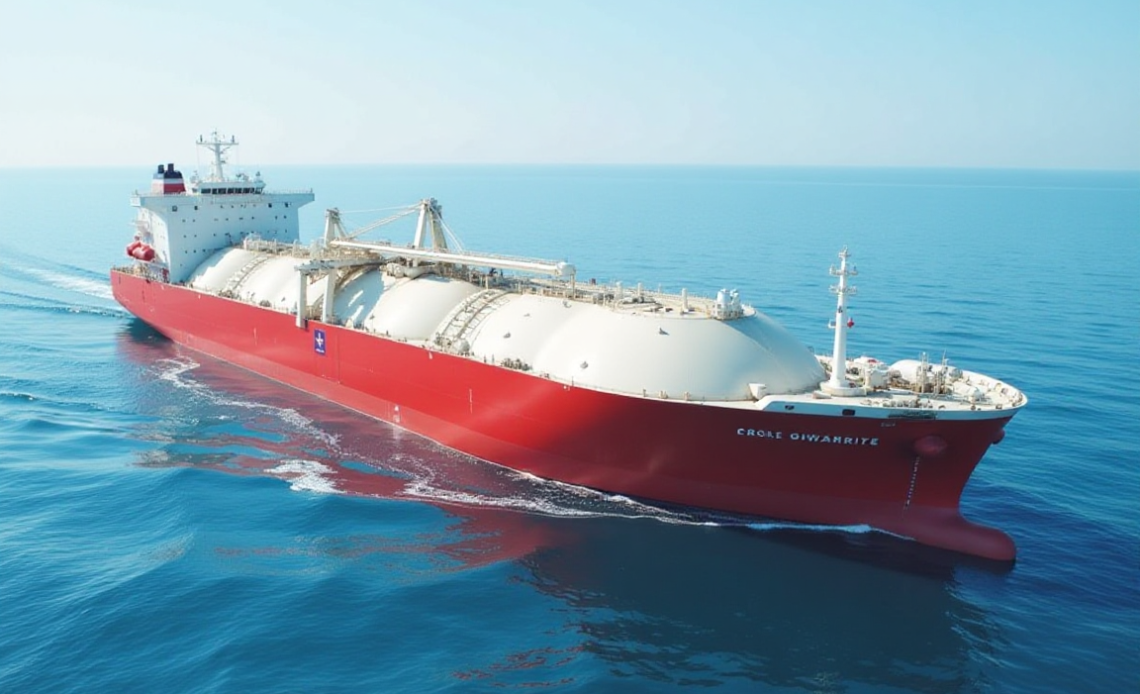
European gas prices, already on a downward trend, face fresh uncertainty after heightened rhetoric between the US and Iran, fueled by statements from President Donald Trump, reignited fears over the security of the vital Strait of Hormuz—a transit point for a crucial one-fifth of the world’s seaborne LNG deliveries.
LNG shipments from US terminals are reportedly nearing a return to normal, with Bloomberg indicating that volumes have rebounded almost to the average seen in the first half of January, following a slump on Monday.
This recovery aligns with earlier reports of a broader return to normal activities in the US.
While this offers some reassurance, the situation remains critical because EU gas storage is only at 43.5%, according to Commerzbank AG.
In a typical winter, these levels would drop an additional 15 percentage points by the end of March.
“Whether this will happen depends, on the one hand, on demand: lower temperatures are now forecasted for Europe, although weather forecasts have fluctuated greatly recently,” Barbara Lambrecht, commodity analyst at Commerzbank AG, said in a report.
On the other hand, it depends on imports: following the resumption of LNG exports from the US, the signs are at least better here.
US LNG and European Import Dynamics
EU gas imports are currently showing a significant upward trend, according to recent analysis from the Bruegel think tank.
Data collected for the initial twenty days of this year reveals that the European Union’s imports were a striking 14% higher when compared to the corresponding period in the previous year.
This notable increase in incoming gas supplies carries important implications for the Union’s energy reserves.
Under the assumption of ceteris paribus—meaning all other factors remain constant—a higher volume of imports would naturally be expected to correlate with a reduction in the rate at which gas is withdrawn from storage facilities.
This dynamic suggested a potentially easing pressure on reserves, which is a positive development for energy security, particularly during peak demand seasons.
The extent to which this trend continues will be a key indicator for the EU’s resilience to potential supply shocks throughout the rest of the year.
US market: Henry Hub and inventory overhang
The happiness of one person often comes at the expense of another’s misfortune.
In the US, the front-month contract for Henry Hub was trading at just $3.75 per mmBtu on Thursday morning, around $3 lower than on Wednesday.
Lambrecht said:
However, the massive decline was due to a contract change.
The recommencement of LNG shipments has already led to a slight increase in price across the Atlantic during trading.
US natural gas inventories dropped by 242 billion cubic feet in the last reporting week, exceeding market expectations, according to the US Department of Energy.
While the market has seen some recent inventory drawdowns, a significant overhang persists.
Current inventory levels remain stubbornly high, resting at 5% above the five-year historical average.
This deviation is a key concern for market watchers, as the rate of decrease has been disappointingly slow.
Steep drop in stocks likely
Data from the most recent week shows that the change in this deviation is marginal, suggesting that the structural imbalance between supply and demand is not correcting itself at a pace conducive to sustained price recovery or market normalisation.
The continued elevation of inventories acts as a ceiling on upward price movement, creating a bearish sentiment that weighs on the market despite other potentially positive fundamental indicators.
The impact of last weekend’s winter storm on the figures is apparently either minor or not yet reflected, according to Lambrecht.
A steep drop in stock values is expected during the present reporting week due to last week’s storm.
However, it remains to be seen whether there will be a record decline in stocks, as some expect.
At the time of writing, the Henry Hub natural gas contract on the New York Mercantile Exchange was at $4.098 per mmBtu, up 4.4%.
The post Strait of Hormuz fears and low EU storage reignite uncertainty over European gas prices appeared first on Invezz