
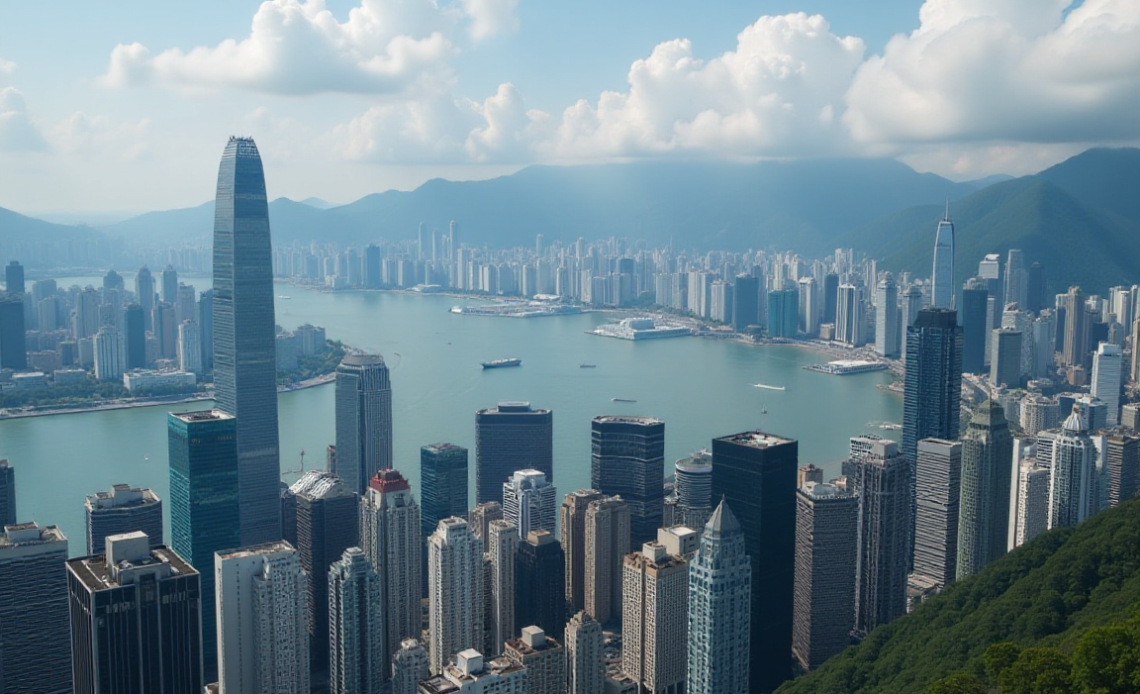
Hong Kong stocks came under pressure on Friday, with the Hang Seng Index falling for the second consecutive day, reaching its lowest level since February 6 this year. It retreated to a low of H$26,550, down sharply from the year-to-date high of H$28,000.
Hang Seng Index crashed as global equities dipped
The Hang Seng Index continued its recent downward trend, mirroring the performance of US and Canadian equities.
The TSX Composite dropped by over 2.3%, while the Nasdaq 100 and S&P 500 indices fell by over 0.50%. Other global indices like Brazil’s Ibovespa, ASX 200, and Shanghai also dropped. It is common for Asian stocks to dive after weakness in the US equities market.
US stocks dropped on Thursday after a report released on Wednesday showed that the labor market strengthened in January. The economy added over 130,000 jobs in January, while the unemployment rate retreated to 4.3%.
The strong jobs numbers mean the Federal Reserve will likely hold interest rates steady for longer than expected.
In separate statements, Lorie Logan and Beth Hammack insisted that the bank will not cut interest rates soon, as inflation has remained above the 2% target.
The next important catalyst for the stock market will be the upcoming US consumer inflation report, which will come out on Friday.
Economists polled by Reuters expect the upcoming report to show that the headline Consumer Price Index (CPI) retreated to 2.5%, while the Core CPI dropped to 2.6%.
READ MORE: AMD stock tumbles 3%: analysts say market is missing this key catalyst
Top movers in Hong Kong
Most companies in the Hang Seng Index were in the red on Friday. Zijin Mining Group, a top gold mining company, dropped by nearly 5% even as gold continued its strong uptrend.
China Life Insurance, Xinyi Solar, Meituan, China Petroleum & Chemical, Baidu, and AIA were down by over 3.5%. Other top laggards in the index were companies like PetroChina, CNOOC, Ping An Insurance, and Li Auto.
On the other hand, some of the top gainers were companies like Haidilao International, Lenovo, China Unicom, and Innovent Biologics.
Hang Seng Index technical analysis
The daily timeframe chart shows that the Hang Seng Index has rebounded in the past few months. It rebounded after the index found a strong support level at $25,185, its lowest swing in October, November, and December last year.
It peaked at a high of H$28,000 in January this year and then pulled back to the current $26,550.
A closer look shows that it remains above the 100-day Exponential Moving Average (EMA) and the Supertrend indicator.
Also, the index has formed a megaphone chart pattern, which is a common bullish continuation sign. This pattern is made up of two ascending and diverging trendlines and is now on the lower side.
Therefore, there is a likelihood that the index will rebound in the coming sessions. If this happens, it will likely retest the upper side of the wedge at $28,000.
On the other hand, a drop below the 100-day moving average at $25,590 will invalidate the bullish outlook.
READ MORE: Why Tesla stock is tanking around 3% on Thursday
The post Hang Seng Index dips to a key support as global stocks retreat appeared first on Invezz